




How Listening Steers My Work as a Legal Engineer
Harvey Legal Engineer Imene Hamdi-Cherif shares how she helps legal teams build AI around their processes and why empathy is as central to the role as legal experience.
I’ve taken a slightly meandering route to Legal Engineering. My background is in employment, technology, and privacy law, and I’ve also worked as a full-time pro bono lawyer. Along the way, I completed a course in digital product management, which gave me a better understanding of how products move from an idea to something people rely on in everyday life. I’ve tended to follow what genuinely interests me and brings me joy: working directly with people, contributing to work that impacts people’s everyday lives, and understanding how products become part of the way we live and work.
Legal Engineering brings those interests together. At Harvey, I work directly with legal teams to explore where Harvey could support their work. I often hear about challenges I faced myself when practicing law, and I enjoy drawing on that experience to better understand their perspective.
Recently, I prepared a demonstration for insurance litigation lawyers, a practice area outside my own. To make it relevant, I learned about the kinds of matters they handle and the challenges that can arise throughout a claim. The work changes from team to team, but it starts with understanding people’s challenges and what they’re trying to accomplish.
“The work changes from team to team, but it starts with understanding people’s challenges and what they’re trying to accomplish.”
What the Role Looks Like in Practice
There isn’t a typical day in my role. I might speak with a prospective customer about the challenges they’re facing, then prepare a demonstration tailored to their work a few days later. Other days, I might be speaking with prospects and customers at a conference, running a hackathon with law students, or helping pro bono teams use Harvey in their practice. I may also lead a training for a team piloting Harvey or work with a customer to build an agent for a specific workflow.
Alongside prospective customers, I’ve built a wide range of agents, from one that automates the population of insurance reports to another that helps a legal team draft its annual report. On the insurance report, an insurance advisory team wanted to turn insurers’ quotes into a client report using their own template. Over a few workshops, they walked me through how they prepare it by hand, and we built that process into the Harvey agent. We compared its output against a report they had already completed, refined it together, and they then reviewed its results. Their feedback was that it got them most of the way to a finished report, which was a big win for them.
Harvey ships new features quickly, so I’m also constantly testing them and learning how they work in practice. I bring that experience into customer conversations to explore where a capability could fit, then take what I learn from those conversations back to Product.
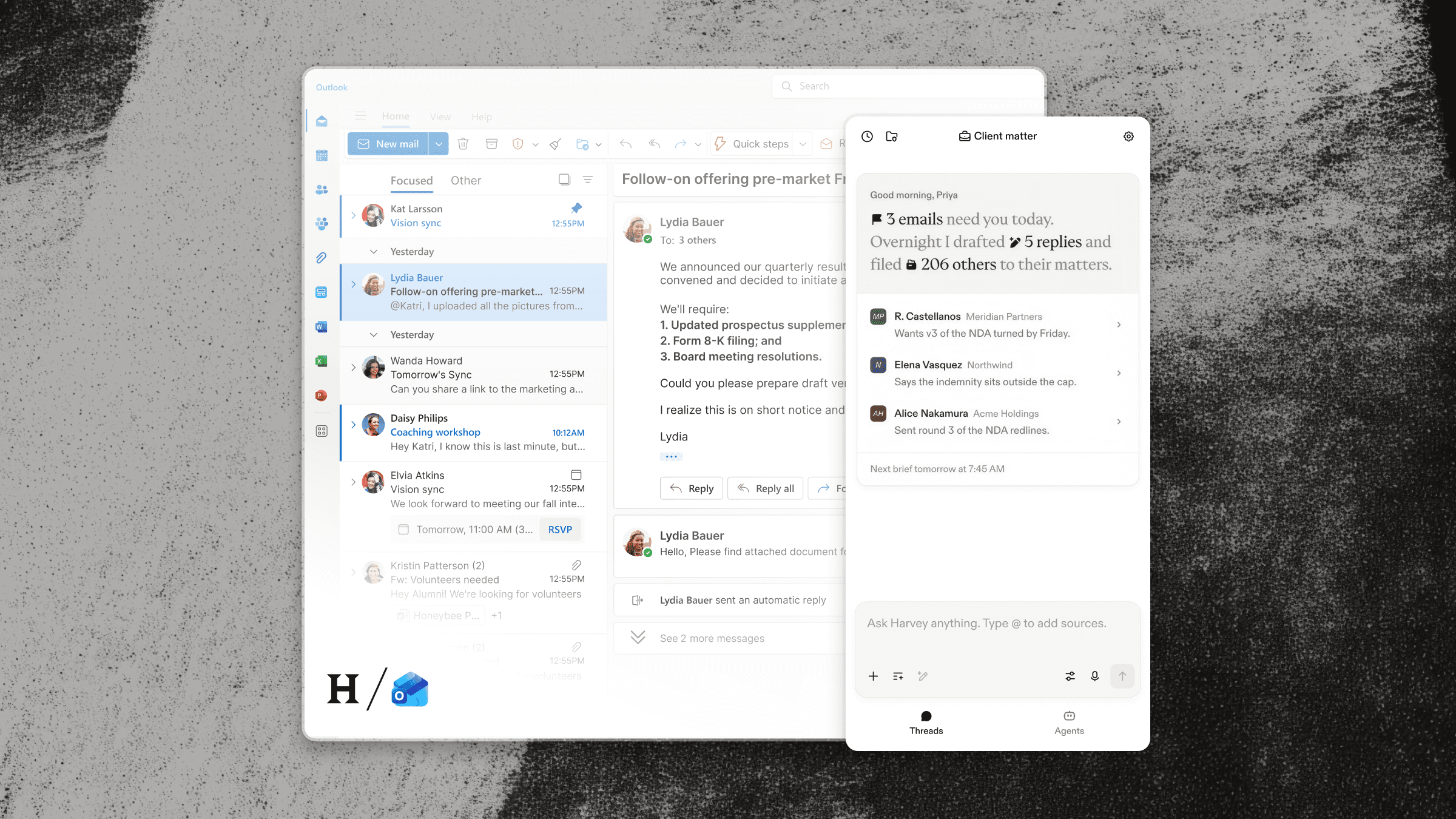
As a lawyer, I spent a lot of my day in my inbox. Most of my work started there, and managing it was a job in itself. So when Harvey released updates to Agents in Outlook, I was excited and put my hand up to test them. I tried the new features the way I would have used them in practice, then shared what worked well and what could be even better with Product. I love this part of the role!
I’m also really excited to be partnering with pro bono teams to leverage Harvey and support them in delivering the important work they do. This has been a real highlight of my time here.
Why the Human Connection Matters
I think wanting to feel heard and understood is a fundamental human need, and that doesn’t change when the conversation is about AI. Legal Engineers bring their experience as lawyers to the conversation, along with empathy for the people doing the work.
“Connecting with lawyers, listening to them, and understanding what they need will remain important [to being a Legal Engineer].”
The technology will keep changing, but connecting with lawyers, listening to them, and understanding what they need will remain important. I think lawyers are particularly well placed to bring the two together in the context of legal AI.
We recently spoke with a team expecting a very large volume of claims, which can be challenging to manage. We discussed how claims reached them and what tools they had, then workshopped how Harvey could support them across the life of a claim, from intake through to resolution. It was awesome to watch them realise how Harvey could help with such a challenging task, and support them in managing risk and responding to these claims.
What Helps Someone Thrive as a Legal Engineer
I’d name creativity, curiosity, adaptability, and kindness. Creativity helps me think of different ways Harvey could address a challenge. Curiosity means wanting to understand a customer’s challenges, business, and broader context. Adaptability matters because AI is moving quickly and the work can change direction. Kindness matters because you’re often helping people navigate something unfamiliar; so kindness and genuine interest in their experience make a difference.
If you’re considering Legal Engineering, ask yourself whether you enjoy finding better ways to solve problems and helping other people do the same. Do you like listening to people, learning about their challenges, and brainstorming possible solutions? Are you energised by constantly learning and working with people? If so, Legal Engineering may be worth exploring.
It’s hard to say exactly how Legal Engineering will evolve over the next few years. The more technical parts of the role may change, but people will continue to value human connection. Listening to lawyers and understanding what they need will remain at the heart of the work.
Interested in becoming a Legal Engineer? Build the foundational skills with Harvey Academy’s free, self-paced Legal Engineering Certification.