


How AI Contract Comparison Scales Redline Review to What Matters
Traditional redlining gives every edit equal weight. Learn how AI surfaces the risk-relevant changes so lawyers review exceptions, not everything.
The counterparty's redline lands at 6:00 PM — a 40-page master services agreement with 100+ tracked changes. Six of them matter for the deal. The rest are cosmetic. The associate has until the partner call in the morning to work out which is which. An effective comparison workflow moves through three questions: What changed? Which changes matter? And what does the lawyer need to do next?
That's the shape of the problem traditional contract comparison creates. Every edit shows up the same way. The lawyer's attention gets sliced across all of them. And the changes that matter for the deal — a redefined materiality threshold, a carve-out that shifts risk allocation — hide inside the volume of edits that don't.
AI-assisted comparison reshapes that work. It ranks the changes by materiality and pushes the exceptions to the top, so the lawyer's attention lands on the edits that need judgment rather than on the 80 that just need a nod.

Why Traditional Contract Comparison Creates a Signal-to-Noise Problem
Manual redline review breaks at the volume commercial deals now generate. Any commercial contract redline can carry 100 or more tracked changes. And the same associate reading six redlines in a day starts pattern-matching after the third: every carve-out starts to look familiar, every definition shift blends in, and the review gets faster but less careful.
Not every change matters. But the ones that do are often the smallest — a redefined materiality threshold, a single word added to a carve-out — and they hide inside the volume.
Focus Review on Material Exceptions
The shift changes how contract comparisons are reviewed in practice:
Traditional Comparison | AI-Assisted Comparison |
|---|---|
Identify every textual change | Classify and structure the changes |
Lawyer reviews each edit | Surface the exceptions |
Lawyer decides what matters | Lawyer spends attention on the changes that need judgment |
What Makes a Contract Change Worth a Lawyer’s Attention?
AI applies a materiality framework to every edit. Each change gets three tests:
- Does the edit change an obligation?
- Does it shift risk allocation between the parties?
- Does it move a term outside the firm's playbook range?
Cosmetic edits (recital tweaks, grammar corrections, defined-term formatting) meet none of the three. Structural edits (an indemnity carve-out addition, a new materiality qualifier) meet at least one.
Edit Type | Typical Materiality Signal | Review Priority |
|---|---|---|
Definition shifts (materiality, MAE, MAC thresholds) | Scope changes flow downstream through the whole contract | Very high |
Indemnity carve-outs or caps | Direct risk allocation shift between parties | Very high |
Numerical changes to caps, baskets, or payment terms | Outside-playbook signal if amount exceeds fallback range | High |
Governing law or jurisdiction changes | Changes dispute forum and applicable law | High |
Rep additions or scope expansions | New obligations or expanded seller commitments | High |
Carve-out additions to covenants | Expansion of counterparty rights or exceptions | Medium-high |
Notice provision or address changes | Procedural, rarely material unless in specific contexts | Low-medium |
Recital or preamble edits | Usually clarifying or cosmetic | Low |
That filter is what turns “here are 120 changes” into “here are the six that need discussion.” But identifying the exceptions is only the first step. The next question is whether each change is acceptable for this deal — which requires comparing the counterparty’s position against the organization’s own standards.
Their Position vs Your Playbook, Not Just Their Latest Draft
Version-to-version comparison tells you what changed. Playbook- grounded comparison tells you whether the change is acceptable to your organization. That distinction is the difference between an edit-tracking tool and a review workflow.
AI reads the redlined document alongside the playbook and identifies where the counterparty's language deviates from an approved standard or acceptable fallback. It surfaces those deviations as a prioritized issues list. It also distinguishes edits that create new obligations from edits that only modify existing ones.
This kind of comparison operates one round at a time: the current version against the previous one, filtered through the playbook. Tracking positions and concessions across many rounds of the same negotiation is a different workflow, one that lives with the negotiation-memory side of the practice rather than with redline review itself.
Comparison Type | What it Surfaces | What the Lawyer Must Still Do |
|---|---|---|
Version-to-version comparison | Every textual difference between the two drafts | Recall the organization’s position on each term and decide whether each edit is acceptable |
Playbook-grounded comparison | Edits that fall outside approved standard or acceptable fallback range | Focus judgment on the flagged exceptions |
What playbook-grounded comparison flags in practice:
- Numerical terms that exceed the acceptable fallback range (caps, baskets, payment terms)
- Additions outside standard scope (new indemnity carve-outs, additional reps, expanded covenants)
- Structural language shifts that ripple through the contract (materiality qualifiers added or removed, MAE/MAC threshold changes)
- Jurisdiction or dispute-forum changes that trigger internal escalation
- Concessions the counterparty has bundled with give-aways to make them harder to spot
In Practice: Chris Tart-Roberts, Macfarlanes' Head of Lawtech and Chief Knowledge & Innovation Officer, has described the firm using Harvey for the ongoing review of hundreds of financial instruments for a client. That's a playbook-grounded comparison at scale. The review has to stay fast enough for time-sensitive investment decisions and consistent across a large document set.
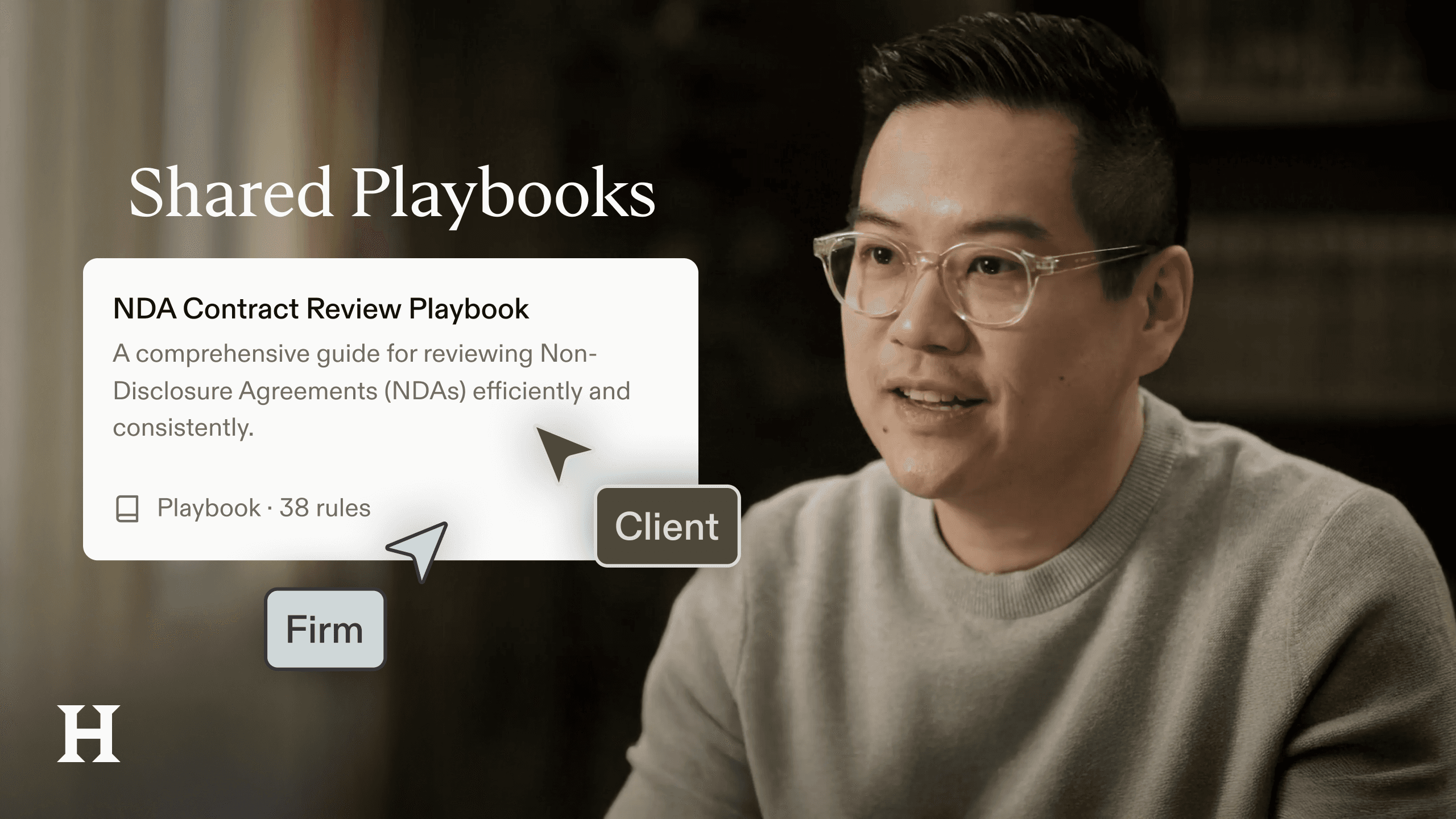
See how legal teams use shared Playbooks in Harvey to compare counterparty redlines against approved standard positions.
Turn Material Changes Into Decision-Ready Issues
Once the material exceptions are identified and tested against the playbook, the next question is what to do about them. For each flagged edit, the lawyer needs enough context to decide whether to accept it, revise it, escalate it, or push back. For this, AI turns those edits into four outputs:
- A plain-text summary of every new obligation with clause reference and party owed
- A categorization by obligation type (deliverable, payment, notice, ongoing representation, one-time action)
- A flag for any obligation that duplicates or contradicts one elsewhere in the contract
- An open issues list — items still under negotiation that the deal team needs to bring back to the counterparty
These outputs feed downstream. What the counterparty added to the redline becomes what the business tracks after signature. The same obligation extraction that closes a deal opens the post-signature obligation workflow.
For every meaningful edit, the lawyer needs to see:
- What changed
- Why it matters
- Whether it deviates from the playbook
- What obligation it creates
- Who benefits
- What decision remains open
AI can structure that context by summarizing new or modified obligations, categorizing them by type, flagging conflicts or duplication elsewhere in the contract, and identifying issues that remain open for negotiation. The point is not to make the negotiation decision for the lawyer. It is to organize the information so the lawyer can make that decision with the relevant context in view.
Verify and Act in the Lawyer’s Working Environment
A decision still has to be verified against the contract itself. A comparison workflow only earns its place if the lawyer can move from flagged issue, to source language, to action without creating a second review burden.
- Inspect the source language
- Verify the AI’s characterization of what changed
- Apply their own playbook
- Make or approve edits
- Continue working in the document environment they already use
That last one matters most. If the lawyer has to leave Word to verify what the AI flagged, the tool has moved the friction, not removed it. See the human-in-the-loop principle for the broader take on this.
Where Contract Comparison Ends and Negotiation Begins
That is the progression: identify what changed, determine what matters against the playbook, and turn the exceptions into decisions the lawyer can verify and act on. From there, comparison gives way to negotiation.
AI can carry the reading, structuring, and extraction. The lawyer still decides what is acceptable, what to push back on, and what to escalate. The difference is that those decisions land on the handful of edits that matter for the deal, not the dozens that do not. That's the human-in-the-loop principle applied across the workflow, not just at the review desk.
In the comparison moment specifically, AI ranks the counterparty's edits by materiality and surfaces the exceptions. The lawyer still decides what's acceptable, what to push back on, and what to escalate — but the decisions land on the six edits that matter for the deal, not on the 90+ that don't. Playbook-grounded drafting sets up the redline stage, and the redline stage sets up post-signature obligations. The contract lifecycle management workflow picks up what happens after signature.
For in-house teams looking at this as a workflow shift, the in-house solution page walks through how Harvey supports commercial contract work end-to-end. Contract Intelligence is where playbook-grounded comparison runs. For teams evaluating the software category itself, what to look for in legal document comparison software covers the buying-side criteria. For broader single-contract review, see the AI Contract Review guide.
AI Contract Comparison FAQs
1. What's the difference between contract comparison and contract review?
Contract review is the analysis of a single contract against risk and playbook criteria. Contract comparison is the analysis of the changes between two versions of the same contract, typically a counterparty redline. See the AI Contract Review piece for the broader review workflow.
2. What if we don't have a formal playbook? Can AI still spot risk-relevant edits?
Yes. Without a playbook, AI still flags edits that change obligations, shift risk allocation, or fall outside common commercial standards. A playbook sharpens the flagging by anchoring it to the organization's specific accepted positions, but comparison work is defensible without one.
3. Can AI compare contracts in different formats?
Yes. The workspace handles Word documents (including tracked changes), PDFs, and clean text. Word integration lets the AI-flagged differences round-trip back into the working document so the lawyer stays in the environment they already use.
4. Does the comparison work across multiple redlines from different parties?
Yes. Multi-party deals — financing documents, joint ventures, syndicated agreements — often have redlines arriving from three or four counterparties. All can be compared to the base version simultaneously, with each counterparty's changes attributed separately.
5. How long does a version comparison take?
Minutes rather than hours. A typical commercial contract redline processes end-to-end faster than an associate can read through the tracked changes, which shifts the constraint from review time to review judgment.


