


Legal AI vs. Traditional Legal Research Tools
AI in legal research changed how lawyers find and reason over the law, not the law itself.
Every working lawyer learned research the same way: keyword databases, Boolean strings, citators, and the discipline of reading everything. The newest tools answer questions instead of returning result lists, and the profession is deciding what to make of that. None of this replaces the older tools, and the reasons why are worth spelling out. The law hasn't changed, and neither have the authoritative databases that hold it. What changed is the layer that finds and reasons over them, which is what AI in legal research means in practice.
Take one question: How do courts in two states treat a liquidated damages clause in a terminated services agreement? The traditional 20 minutes goes to building the search string, scanning forty results, opening the eight that look relevant, and assembling an answer by hand, with the citator open in a second tab. The AI-native 20 minutes starts with the question asked in plain language and comes back with a synthesized answer, the reasoning laid out, and the supporting authority attached for verification. The rest of this article explains what sits behind that difference, what the older way still does better, and how to evaluate the new tools.

What Traditional Legal Research Does Well
The incumbent deserves its full due. Traditional legal research software rests on comprehensive, editorially maintained databases of primary and secondary law, refined over decades. Boolean search gives the researcher precise control when a search has to be exhaustive, and citators track treatment and validity so a lawyer knows whether an authority still stands. Behind all of it sits earned professional trust: generations of lawyers have staked filings on these systems. When the assignment is to find everything, a controlling case in a narrow jurisdiction, every treatment of a statute since amendment, the precision of a well-built Boolean search is still the right instrument.
The friction is just as real. The burden sits entirely on the researcher, who translates a legal question into keywords, reads every result, checks every flag, and assembles the answer by hand. Done well, the method is thorough. It's also skill-dependent and slow, and the quality of the answer tracks the quality of the search string.
What AI Changes About the Work
Ask how AI improves legal research and the answer comes down to three shifts, each with a trade attached.
From Keywords to Questions
AI in legal research starts with the question itself. The researcher asks in plain language how the liquidated damages clause holds up, rather than reverse-engineering the string most likely to catch the right cases. The tool handles the translation into searches, which removes the single most skill-dependent step in the old workflow. The trade is control: the lawyer gives up some visibility into exactly what was searched, which is why source transparency matters so much in this generation of tools. A system that shows what it retrieved and why earns trust; one that hides the trail doesn't deserve it. The practical difference shows in the first minute: the liquidated damages question gets asked the way a partner would ask it, and the tool decides which searches that question requires.
From Result Lists to Reasoned Answers
Instead of 40 documents to read, the lawyer gets a synthesized answer with the reasoning and the supporting authority attached. Agentic research pushes the shift further: the system runs the searches, follows the citations, checks the treatment, and assembles the analysis in steps, closer to delegating the task than performing it. The deeper mechanics are covered in how agentic search unlocks legal research, and the discipline of working through precedent this way is its own topic, covered in AI for case law research. One caveat rides along with all of it: a synthesized answer is only as good as its grounding.
Grounding, Citations, and the Hallucination Question
The fear deserves a direct answer, because it comes from real incidents: a general chatbot can invent authority. Purpose-built legal research AI works differently. It retrieves from authoritative legal databases and ties every statement to a source the lawyer can open, which is the difference that makes it usable for real work. Verification remains the lawyer's job either way, and that discipline is worth keeping sharp, as covered in the case for legal AI oversight. The practical distinction is that tools built for lawyers make verification fast, because every claim carries its citation.
Action | Traditional Database Research | AI-Native Legal Research |
|---|---|---|
You provide | Keywords and Boolean strings | The question, in plain language |
You get back | A ranked list of documents | A reasoned answer with cited authority |
Reading the law | You read and synthesize everything | AI synthesizes; you verify the sources |
Checking validity | Citator flags, checked manually | Treatment surfaced in context, confirmed by the lawyer |
Where it can fail | Missed results from the wrong keywords | Wrong or thin grounding; verify before relying |
Why the Old Sources Power the New Layer
The framing of AI against traditional tools misses how the strongest systems are built. AI-native research runs on the same authoritative content lawyers already trust, editorially maintained statutes, cases, and secondary sources, not the open web. Legal AI platforms integrate established research databases as grounding sources, so the database remains the source of truth while AI changes how fast a question becomes a verified answer. The layers are complements, and the integrations between them are the proof. See for yourself:
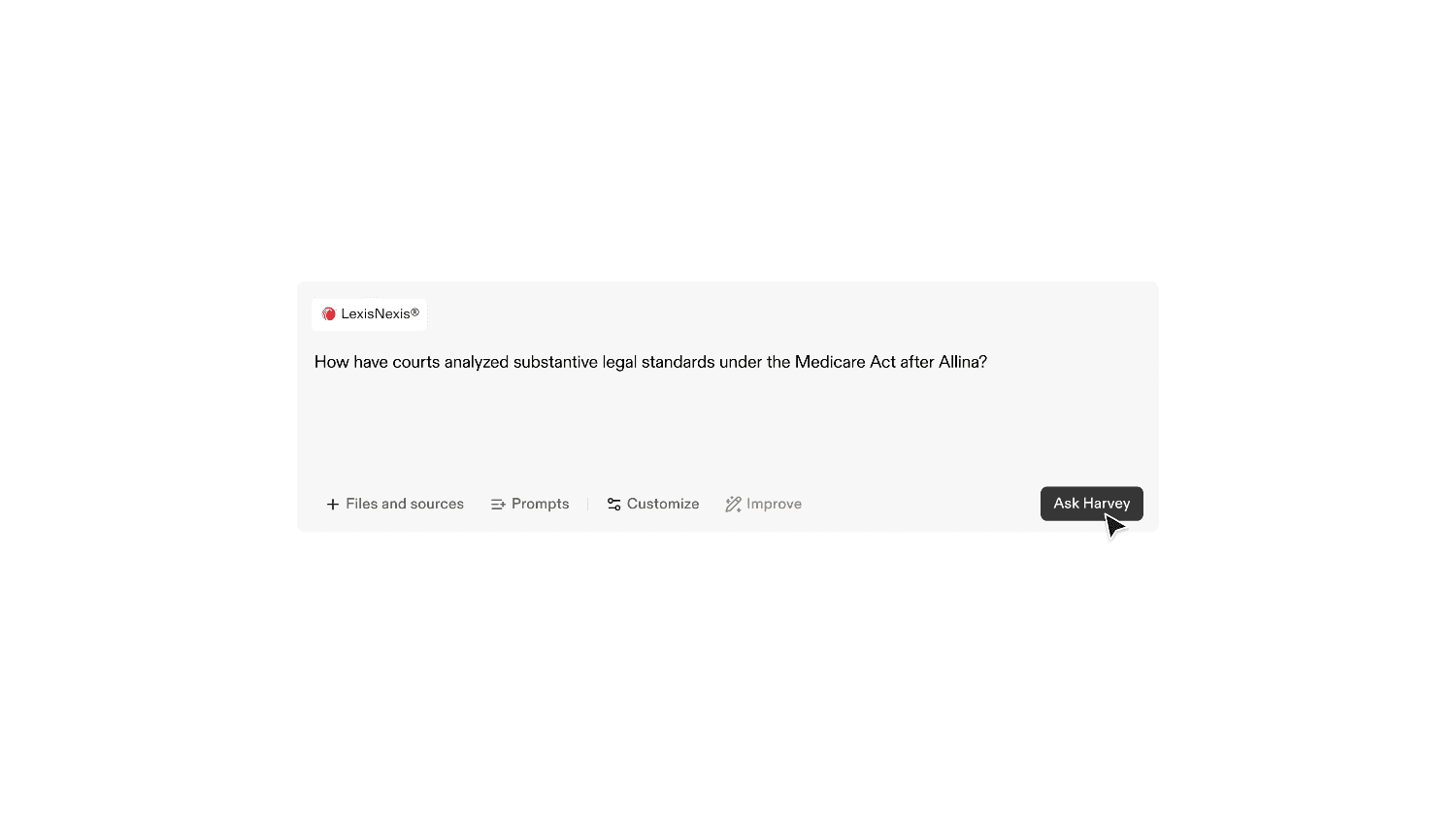
In practice, the split looks like this. Exhaustive validation work and jurisdiction-specific edge cases still reward traditional control, where the lawyer decides exactly what gets searched. Speed to a synthesized, cited starting point rewards the AI layer. Most research teams run both, and the ones that do stop asking which side wins. A common pattern: the AI layer produces the cited starting point in the first hour, and the traditional layer carries the exhaustive validation before anything gets filed.
How to Evaluate an AI Legal Research Platform
A skeptical buyer can cut through most marketing with five questions. What sources ground the answers, and can you see them? Is every statement traceable to an opinion or statute you can open? How does the system handle negative treatment? Has performance been measured on realistic legal tasks rather than demos? And how is client data handled?
The measurement question deserves the most weight, because published benchmarks on real legal work separate engineering from claims. Harvey publishes its results openly, on BigLaw Bench for realistic legal tasks and on the Legal Agent Bench for agentic work, which is the standard any platform should be willing to meet. For the criteria that apply beyond research, how to choose the right legal AI platform extends the same framework. The best evaluation step costs nothing: bring a real matter to the demo, one your team has already researched, and compare the tool's grounded answer against what you know the right answer to be.
How Harvey Approaches Legal Research
Harvey is built for the standard that this evaluation framework describes. Research runs agentically over authoritative legal sources, including integrated research databases, and every answer comes back grounded, with citations the lawyer can open and verify. Performance is published on realistic legal benchmarks rather than asserted. The lawyer stays at the center of the workflow: Harvey accelerates the path from question to verified answer, the lawyer confirms the authority and owns the conclusion, and the same platform carries the verified research forward into legal drafting.
The comparison this article draws is the reason that design matters: the new layer earns its place by making the old standards easier to meet, not by asking anyone to lower them. For the fuller picture of the method itself, the complete guide to AI for legal research covers the how-to this comparison deliberately leaves out.
What Changed, and What Deserves Your Trust
The databases endure, the citator still matters, and the skills of a good researcher transfer whole. What changed is the layer on top: questions instead of keywords, reasoned answers instead of result lists, and verification made fast because every claim carries its source. Trust in this generation of tools is earned the same way it always was, through work you can check. If your team wants to see grounded, agentic research against its own questions, request a demo and bring the hardest one you have.
Common Questions About AI and Legal Research
Does AI legal research make sense for small firms and solo practitioners?
Often more than for anyone else, because the research burden falls on fewer people. The economics have shifted from enterprise-only pricing toward tools a small practice can justify, and the evaluation bar doesn't change with firm size: grounded answers, open citations, and clear data handling.
How do courts expect lawyers to use AI in research?
Carefully, and with the lawyer fully accountable. Courts have sanctioned filings built on invented citations, and a growing number of judges require certification that AI-assisted work was verified. The professional duty hasn't changed: whatever tool produced the first draft of the research, the lawyer who signs the filing owns every authority in it.
Can AI research tools search a firm's own documents?
The stronger platforms can, alongside the public law. Connecting research to internal work product, past memos, briefs, and knowledge management systems, means a question gets answered with both the law and what the firm has already written about it, with permissions controlling who sees what.
What research skills still matter in the AI era?
The ones that were always the hard part: framing the question precisely, judging which authority controls, reading cases critically, and knowing when an answer is incomplete. AI removes the mechanical translation into keywords; it raises the value of everything that comes after.


