


AML AI Software: Why Detection Alone Isn't Enough
AML AI software spans two layers: detection systems that flag activity, and legal AI that interprets rules, updates policies, and documents investigations.
For anti-money laundering (AML) teams, pressure rarely comes from a single direction. Alert volumes continue to climb, sanctions regimes evolve constantly, and regulators expect faster, better-documented decisions — even as compliance teams are asked to do more with the same resources.
AI is beginning to ease that burden, but much of the conversation treats AML AI as a single category of software. In reality, today's tools fall into two distinct layers: systems that detect potential financial crime, and AI that helps legal and compliance professionals interpret regulatory requirements, investigate risk, and document their decisions. Buying one does not solve the problems addressed by the other.
This article explains how those two layers work together, where legal AI fits into the AML compliance process, and why strengthening the judgment layer has become just as important as improving detection.
What is AML AI Software?
AML AI software is any tool that uses artificial intelligence to help organizations meet their anti-money laundering obligations. In practice, it spans two distinct layers: detection systems that monitor transactions and screen customers for suspicious activity, and legal AI that helps compliance teams interpret AML rules, maintain policies, review due diligence files, and document investigations.
Most organizations need both because flagging suspicious activity and determining what it means are different jobs. Detection systems identify potential risk; legal AI helps compliance teams interpret regulatory requirements, evaluate supporting information, and prepare defensible documentation for review.

The Two Layers of AML Compliance
Most discussions of AML AI treat it as a single category of software. In reality, AML compliance depends on two complementary layers that solve different problems.
The first is the detection layer. Dedicated AML platforms monitor transactions, screen customers against sanctions and politically exposed person (PEP) lists, score risk, and generate alerts for investigation. These systems do that work well, and this article does not compare or recommend among them.
The second is the legal judgment layer. Once an alert is generated — or a new AML requirement takes effect — compliance teams must interpret what the rules require, determine whether policies remain current, review supporting documentation, and create records that explain and justify their decisions. Those records are what an examiner asks to see.
Many organizations invest heavily in detection technology and assume the judgment layer comes with it. In practice, the growing backlog of policy interpretation, due diligence review, and documentation shows otherwise.
Detection Layer | Legal and Judgment Layer | |
|---|---|---|
Primary question | What looks suspicious? | What does this mean, and what should we do? |
Purpose | Identify potential financial crime and prioritize risk | Help teams interpret obligations, investigate findings, and document decisions |
Typical tasks | Transaction monitoring, sanctions screening, PEP screening, customer risk scoring, alert triage | Interpreting AML rules, updating policies, reviewing KYC and due diligence files, documenting investigations, drafting reports and memos |
Primary users | Financial crime operations, investigators, data and risk teams | Compliance officers, in-house counsel, legal operations, AML advisors |
Typical technology | Transaction monitoring and screening platforms | Legal AI platforms |
Primary outputs | Alerts, watchlist matches, customer risk scores | Policy updates, legal analyses, investigation summaries, regulator-ready documentation, audit-ready records |
Where Legal AI Carries the Load
Detection systems identify activity that may warrant investigation. The more complex work begins afterward. Compliance teams must interpret regulatory obligations, determine whether internal documentation supports a decision, update policies when requirements change, and create records that can withstand regulatory scrutiny months — or years — later.
Each step should answer the same question an examiner is likely to ask: Show me why you reached this conclusion. Legal AI helps teams prepare that answer by accelerating analysis and documentation while keeping attorneys and compliance professionals responsible for the final judgment.
Interpreting AML Rules Across Jurisdictions
AML requirements rarely change in isolation. A FinCEN update, a beneficial ownership rule, a new sanctions program, or an amended EU directive can raise questions across multiple business lines and jurisdictions. Compliance teams must determine what changed, which entities are affected, whether existing controls remain sufficient, and what action the organization should take.
Legal AI synthesizes new guidance into plain-language summaries, grounds its analysis in the underlying regulatory sources, and highlights the provisions most relevant to a particular business or jurisdiction. Compliance professionals review, verify, and apply that analysis before implementing changes, creating a documented interpretation they can explain when regulators ask why a particular decision was made.
Keeping Policies and Procedures Current
AML policies, procedures, and training materials quickly drift as regulatory requirements evolve. A single rule change may require coordinated updates across multiple documents, making manual review slow and easy to miss.
Legal AI compares new regulatory guidance against existing AML policies, onboarding procedures, and internal documentation, flags inconsistencies, and drafts proposed revisions for review. For example, a beneficial ownership rule change might require updates to both the organization's AML policy and its onboarding procedures within the same week. Rather than starting from a blank page, compliance professionals begin with AI-generated redlines that they refine and approve, preserving a documented rationale if regulators later ask how the organization implemented the change.
Reviewing KYC and Due Diligence Files
Customer Due Diligence (CDD) and Enhanced Due Diligence (EDD) files accumulate quickly, particularly for higher-risk customers and complex legal entities. Reviewing every file thoroughly and consistently becomes increasingly difficult as case volumes grow.
Legal AI reviews KYC, CDD, and EDD documentation against an organization's own standards, highlighting missing information, inconsistent risk assessments, and incomplete supporting records before an examiner finds them. Rather than replacing compliance review, it helps teams focus on the files that require the most attention. When regulators ask why a customer was approved or why enhanced due diligence was considered sufficient, the supporting documentation is more likely to be complete, organized, and ready for review.
Documenting Investigations and Reports
AML investigations often span transaction records, customer information, analyst notes, communications, and supporting evidence gathered over days or weeks. Before any decision is made, someone must assemble those materials into a clear, defensible narrative explaining both what happened and why the organization responded as it did.
Legal AI can organize those facts into structured investigation summaries, escalation memoranda, and draft reports that compliance teams review and refine. Drafting and organization belong to the technology; judgment does not. Compliance officers remain responsible for evaluating the evidence, deciding whether suspicious activity should be reported, approving every conclusion, and determining whether to file a Suspicious Activity Report (SAR). The result is a more consistent audit trail that stands up to future regulatory scrutiny.

Working Alongside Your Monitoring Stack
Legal AI complements AML detection systems, it does not replace them. Transaction monitoring platforms, sanctions screening tools, customer risk models, and alerting systems remain responsible for identifying potential financial crime.
Legal AI works on what those systems produce and on the rules that govern them. Once an alert is generated, it helps compliance teams interpret regulatory requirements, review supporting documentation, update policies, draft investigation summaries, and prepare records that can withstand regulatory scrutiny. Detection identifies potential risk; the legal layer determines what it means and documents the organization's response.
What Your Team Still Owns
AI can accelerate analysis and documentation, but it does not assume responsibility for compliance decisions. The judgments that matter most remain with experienced compliance professionals: defining the organization's risk appetite, deciding whether an investigation supports filing a SAR, determining whether to continue or exit a customer relationship, and approving changes to policies and procedures.
The accountability remains there as well. If regulators ask why a decision was made, the answer carries your team's name, not the technology's. Every AI-generated interpretation, policy revision, and investigation narrative should be reviewed against the underlying regulations and supporting evidence before anyone relies on it. Human oversight is not simply good practice; it is essential to a defensible AML compliance program.
Security That Holds up in an Exam
For compliance leaders, security is more than an IT requirement — it is part of regulatory readiness. Before adopting any legal AI platform, organizations should evaluate the same controls they expect from other enterprise technologies.
That starts with enterprise-grade security and recognized certifications. Teams should also understand how customer data is handled, including whether sensitive information is excluded from public model training. Just as importantly, AI-generated outputs should be grounded in verifiable source materials, not unsupported summaries. Finally, the platform should preserve an auditable record of what was reviewed, what changed, and who approved the final work. Those capabilities help organizations demonstrate not only what decisions were made, but how they were reached.
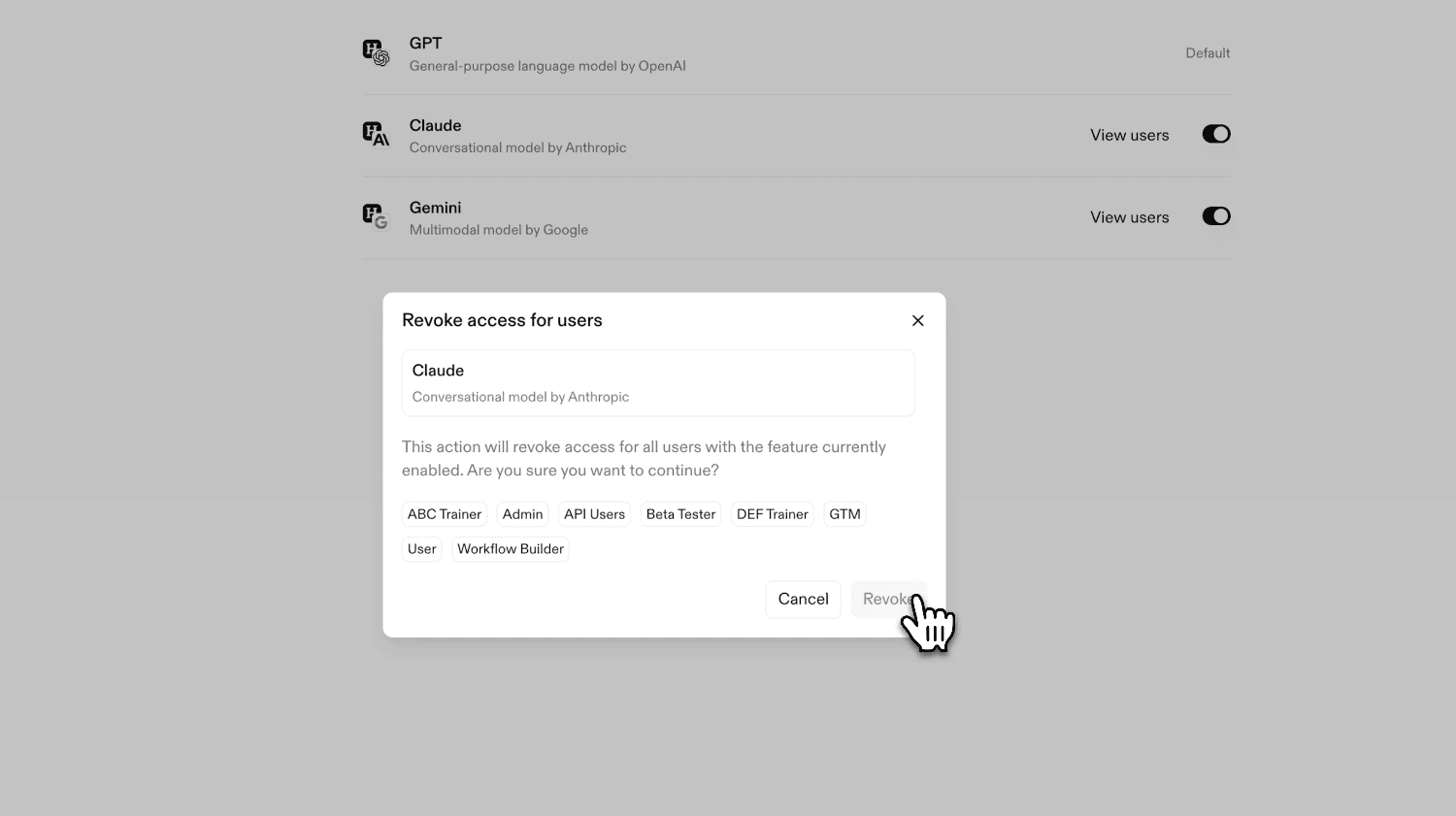
Note: The video does not fully cover certifications, data training policies, encryption, or third-party audits. Please visit our security page, which documents audit logs, data controls, no customer-data model training, independent testing, SOC 2 Type II, ISO certifications, and much more.
How Harvey Supports AML
Harvey helps legal and compliance teams interpret AML requirements, map regulatory obligations, review policies and due diligence files against current rules, and draft investigation narratives, internal memoranda, and regulator responses grounded in verifiable legal and regulatory sources. Compliance professionals review every output, validate the underlying analysis, and remain responsible for every decision.
Harvey works alongside (not in place of) transaction monitoring, sanctions screening, and customer risk-scoring platforms. Those systems identify potential risk; Harvey helps teams determine what the applicable rules require and create documentation that can withstand regulatory scrutiny.
Learn more about how Harvey supports banking and finance teams, explore its in-house regulatory and compliance solutions, or estimate potential efficiency gains with the In-House ROI Calculator.
Judgment at the Center of the Program
Effective AML programs depend on both layers working together. Detection systems monitor transactions and identify potential risk. Legal AI helps teams interpret regulatory requirements, document their reasoning, and prepare for the questions regulators inevitably ask. Throughout the process, the judgments — and the associated accountability — remain with the compliance team.
If you'd like to see how Harvey supports that work, request a demo.
Common Questions About AI in AML Compliance
Where should an AML team start with legal AI?
Start with one recurring piece of work that already creates a documentation burden rather than the whole program. Policy gap reviews after a rule change and EDD file reviews are common first choices, because both have a clear before-and-after and an obvious reviewer. Set the review gate before the pilot begins, so every output has a named owner.
Does the use of AI need to be documented in the AML program?
Your program documentation should show how the work gets done, not only what was concluded. Recording where AI assists, who reviews each output, and how that review is evidenced keeps that answer straightforward. Treat it the way you'd treat any other change to a procedure or control, and fold it into the documentation your team already maintains.
How does legal AI handle conflicting requirements across jurisdictions?
Conflicts surface when the same activity carries different thresholds, timelines, or reporting duties in each place your organization operates. AI can compare those requirements side by side and show where they diverge, which is the part manual tracking tends to miss. Choosing the standard your organization will apply stays a judgment call for counsel.
Who should own legal AI inside a compliance function?
Ownership works best with the person accountable for the output, usually the compliance officer or in-house counsel who signs off on the interpretation, the policy, or the filing. Financial crime operations keeps the detection stack. Splitting it that way avoids the common failure where one group adopts a tool and another group relies on it with no clear reviewer.
Does model risk governance apply to legal AI?
Most organizations apply model risk governance to the scoring and monitoring models in the detection stack. Legal AI sits in a different place, since it drafts and analyzes rather than scoring transactions, but raise it with your model risk function early rather than after an exam. Documenting how outputs are reviewed and who approves them gives you the answer either way.


