


AI for Trademark Search and Brand Protection
AI trademark search finds the conflicts. Trademark clearance calls, office actions, and the enforcement that follows are where legal AI earns its place.
Picture a software startup that has fallen for the name NOVA. If the name clears, it becomes a brand: the domain, the logo, the launch. If a conflict slips through, the same name buys a rebrand, an opposition proceeding, or a lawsuit, usually at the worst possible moment.
AI has changed the first part of that story. A trademark search that once took days of manual digging now runs in minutes, across more registries than any person could cover. The hard part moved downstream, to deciding what the results mean and protecting the mark afterward, and that's where AI is only now starting to help. The arc from here has three parts: the search, the clearance call, and the years of protection that follow, and each one now involves AI in a different way. This article follows NOVA through all three.

AI Trademark Search, in Plain Terms
AI trademark search uses machine learning to find existing marks that could conflict with a proposed one, matching sound, meaning, and visual similarity across trademark registries rather than spelling alone. It surfaces conflicts a keyword search would miss, like a phonetic twin, a translation, or a lookalike logo. What it doesn't do is make the call. Whether a similar mark blocks yours is a legal judgment about likelihood of confusion, made by a professional reading the results. The search is data; clearance is judgment. For a founder running a quick check on a favorite name, that distinction is the single most useful thing to know: a clean-looking result page is a reason to talk to counsel, not a reason to print business cards.
One point of scope before going further: this article covers using AI to do trademark work. Whether AI systems themselves infringe trademarks, through training data or AI-generated logos, is a separate and evolving question that this piece doesn't cover.
How the Search Itself Works
Modern trademark search software matches on three dimensions at once. Phonetic models catch sound-alikes, so NOVVA and KNOVA surface next to NOVA. Semantic models catch meaning, flagging marks that translate to the same idea in another language. Image models compare logos and design marks by visual similarity, which matters more every year as brands lean on distinctive design over distinctive words. Class coverage rounds out the screen, checking the goods and services classes where NOVA will live and the neighboring ones a court would treat as related.
The systems run those comparisons across national and international registries plus common-law sources, and a knockout screen that once took a paralegal an afternoon comes back in minutes. Coverage is the quiet differentiator between tools: the strongest ones reach past the federal register into state registrations and common-law sources, business names, domains, and marketplace listings, because a mark used in commerce can block yours without ever being registered. The trademark offices have joined in too: the USPTO now offers AI-assisted image search and classification support inside its own tools, useful for a first pass, though office tools stop well short of a comprehensive screen.
Dedicated databases do this job, they do it well, and this article isn't here to rank them. The useful thing to understand is what happens when the results land on a lawyer's desk, because for NOVA, a list of thirty close marks is the beginning of the work, not the end of it.
The Call the Database Can't Make
Likelihood of confusion is a multi-factor legal analysis: the similarity of the marks, the relatedness of the goods and services, the trade channels they move through, the strength of the senior mark, and any evidence of actual confusion. A results list answers none of that. Strength alone changes the math: a famous senior mark casts a wide shadow that reaches across loosely related goods, while a crowded field of similar marks leaves each one narrow. Two identical names can coexist peacefully in different classes, and two dissimilar names can collide when the goods, the customers, and the channels overlap. The analysis also runs both directions: the description of goods and services can often be narrowed to steer around a conflict, which is a judgment call about the client's roadmap as much as the register.
Somebody weighs those factors against the client's risk tolerance and writes the clearance opinion the business relies on. For NOVA, that's the moment a maybe becomes a yes, a no, or a suggestion to adjust the goods description. That work belongs to counsel, and it stays with counsel no matter how good the tooling gets. Legal AI enters here, not to run the search, but to carry the analysis and the drafting around it.
From Search Results to Brand Protection
Analyzing Results and Drafting the Clearance Opinion
A comprehensive trademark clearance search can run a hundred pages. Legal AI digests the report, organizes the closest marks by risk, maps each one against the confusion factors, and produces a first draft of the opinion memo with the reasoning laid out for review. Counsel refines the analysis, adjusts the risk calls, and signs the conclusion. The hours that used to go into reading and sorting go into judgment instead, and for NOVA, the clearance call lands in days rather than weeks. Across a portfolio, the same structure means every opinion weighs the same factors the same way, which makes the firm's risk advice consistent from one mark to the next instead of varying by who drafted it.
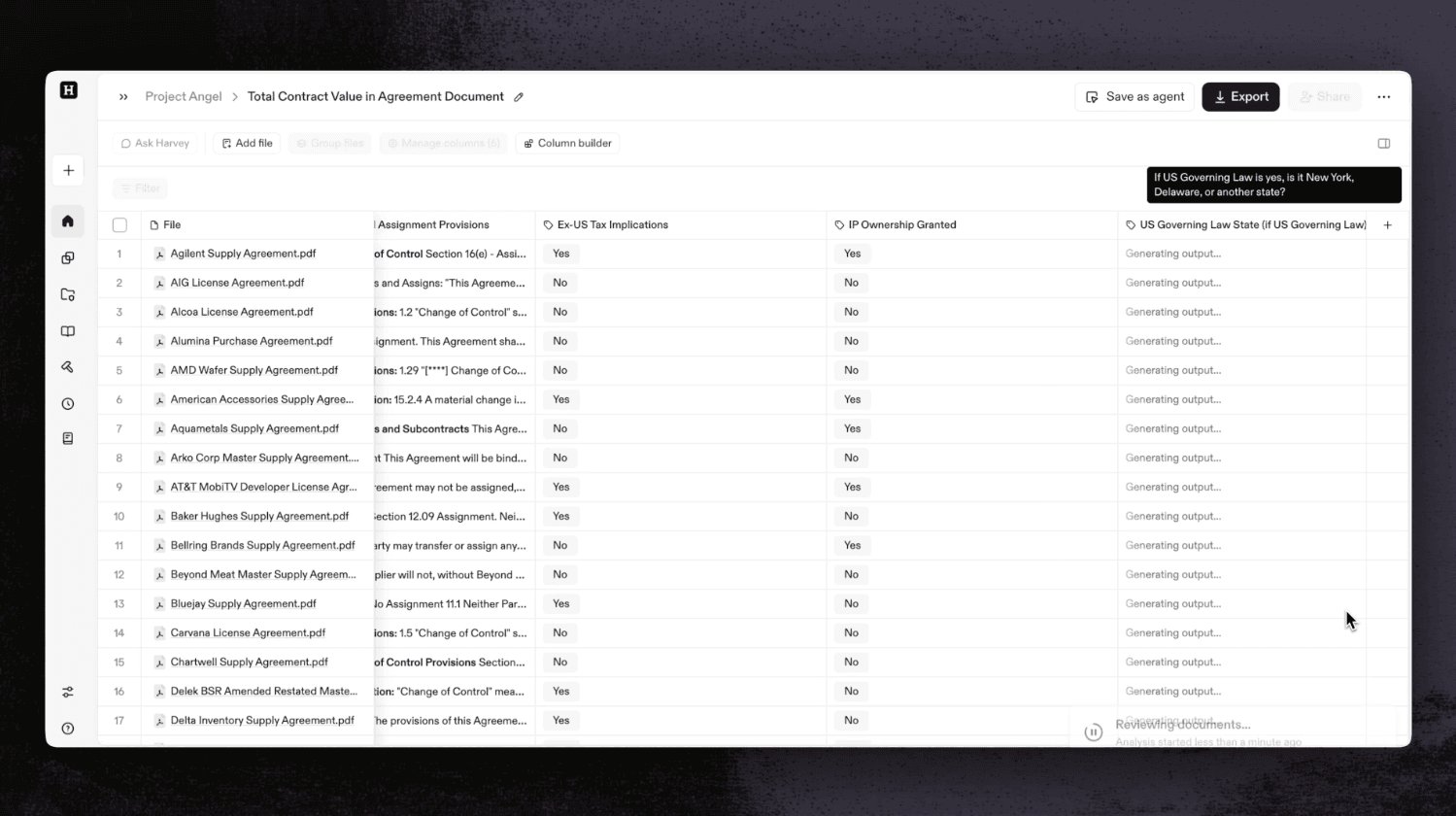
Please note: This walkthrough demonstrates the mechanism generally, not a trademark matter specifically.
Responding to Office Actions
Suppose the trademark office refuses NOVA on likelihood-of-confusion grounds. Legal AI can read the examiner's reasoning, pull the precedent and prosecution history that answer it, and draft a response built as a structured argument on the factors rather than a form letter. Counsel shapes the argument and owns the filing. The same pattern holds for descriptiveness refusals and specimen objections: the AI assembles, the lawyer argues. Office actions run on deadlines, and a response that once consumed a week of associate time can now be reviewed and refined inside a few days, without the quality of the argument thinning out.
Watching and Enforcing the Mark
Registration starts the long game. A trademark watch service flags new filings and new uses that look close to NOVA, and most of them won't matter. A NOVATECH application in an unrelated class can pass without comment; a NOVAH filed for software wants a response inside the opposition window.
Legal AI helps sort the genuine threats from the noise, then drafts what follows: the opposition analysis, the cease and desist letter, the coexistence terms. Trademark monitoring software finds the conflicts; counsel decides which fights to pick, and every letter that goes out carries their judgment, not a template's. The cadence matters as much as the drafting. Watch notices arrive continuously, marketplaces and domains generate their own stream of near-misses, and a team that can assess and respond in days rather than weeks stops small conflicts from maturing into expensive ones.
Database or Legal AI: Which do You Need?
Most teams eventually discover these are two different purchases solving two halves of the same problem, and the budget conversation goes better when that's understood up front. Buying a stronger search database doesn't shrink the clearance and enforcement workload, and buying legal AI doesn't improve registry coverage. The table below is the shortest version of the split, and for in-house teams building the case internally, the in-house ROI calculator helps put numbers behind the pairing.
You need | The tool for it |
|---|---|
To find potentially conflicting marks across registries | A trademark search database with AI matching |
To decide whether a result blocks your mark, and put it in writing | Counsel, supported by legal AI for analysis and drafting |
To catch new conflicting filings over time | A trademark watch service |
To respond, oppose, and enforce | Counsel, supported by legal AI for drafting and file review |
The pairing most IP teams land on is a search database plus a legal AI platform, because the tools do different halves of the same job: one finds what exists, the other carries the legal work that follows.
How Harvey Helps IP Teams
Harvey is a legal AI platform, and for trademark work it picks up where the search ends. IP teams use it to analyze search reports and file histories, draft clearance memos, build office action responses, prepare enforcement correspondence, and review marks across a portfolio, with every output grounded in the underlying documents and every conclusion reviewed and owned by counsel. Harvey doesn't search trademark registries; it works with what the search returns.
Client and brand data stay protected under enterprise-grade security, which matters when the documents in question describe an unlaunched product. The through-line is consistency: the same platform that drafts the clearance memo also drafts the office action response and the enforcement letter, so the reasoning holds together across the life of the mark. To see how this looks inside a real practice, the walkthrough of how intellectual property teams use Harvey covers the day-to-day.
A Mark Earns its Clearance Twice
NOVA's story runs the way most marks do now: the search comes back fast and broad, a professional makes the confusion call, and the brand gets protected over years of watch notices and the occasional fight. AI compresses the first part and strengthens the rest, while the judgment stays human at every step. If your team spends more time processing trademark work than deciding it, request a demo and see what the clearance-to-enforcement side looks like with legal AI carrying the drafting.
Common Questions About AI and Trademarks
How accurate is AI trademark search?
Similarity matching is a real advance over exact-match searching, especially for sound-alikes, translations, and design marks. Accuracy still depends on registry coverage and on a professional reading the results, and no tool can guarantee a mark is safe to use.
What is the difference between a knockout search and a comprehensive search?
A knockout search is the fast first screen, checking a proposed mark against registered marks to eliminate obvious conflicts before anyone falls in love with a name. A comprehensive search goes wider and deeper, covering state registrations, common-law uses, domains, and marketplaces, and it's the level of diligence a clearance opinion is built on. AI has made both faster, but they remain different levels of assurance.
Can I rely on the trademark office's free AI tools?
They're a genuine improvement for a first look, and a poor substitute for clearance. Office tools search the federal register, while conflicts can also come from state filings, common-law use, and marks in commerce that were never registered. Use them to eliminate obvious problems early, then treat anything promising as a candidate for a full search and a professional read.
Who should own the trademark search, counsel or the business?
Run the quick screens wherever the naming happens, but keep the decision with counsel. A business team can knock out obvious conflicts in minutes with modern tools; interpreting a close call, and standing behind it, is legal work, and the clearance opinion should carry a professional's name.
What about AI using trademarked content?
A different question from this article. Whether AI systems infringe marks, through training data, AI-generated logos, or brand misuse in outputs, is an emerging area counsel are watching closely. This piece covers the other direction: using AI to search, clear, and protect marks.


