


Harvey In Practice: How M&A Teams Use Harvey Across the Deal Lifecycle
A look at how transactional teams use Harvey throughout the M&A lifecycle, from early-stage diligence to signing and closing.
M&A transactions move fast. Legal teams must review large volumes of documents, identify deal-critical risks, and deliver clear guidance under tight timelines. By embedding AI directly into the workflows lawyers already use, Harvey fits naturally into the way M&A teams work — helping them save time and focus on the judgment that matters most.
Below are eight practical ways transactional teams use Harvey to surface risk earlier, work more efficiently, and deliver stronger deal advice.
1. Identify Red Flags and Material Risks in Due Diligence
Harvey can review large volumes of diligence materials — such as commercial contracts, employment agreements, compliance policies, and environmental reports — to surface red flags, material risks, key provisions, and open issues. This enables teams to prioritize high-impact issues early, focus senior legal judgment where it matters most, and accelerate deal timelines.
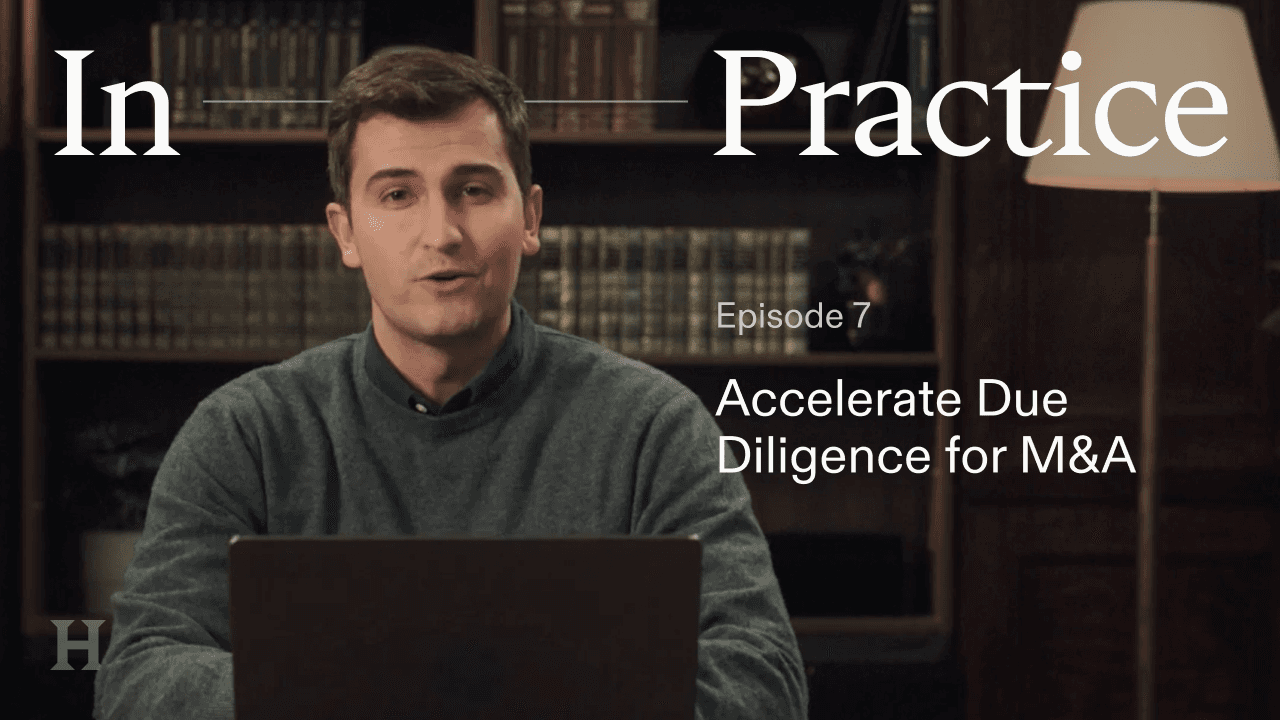
In Practice: End-to-End M&A Due Diligence
In the walkthrough below, a transactional lawyer uses Harvey to capture deal documents from email, analyze hundreds of contracts in Vault, and automatically generate a citation-backed red-flags memo for the client.
Firms are already seeing meaningful gains from this approach. At GSK Stockmann, using Harvey for structured M&A, private equity, venture capital, and real estate diligence delivered initial time savings of 15-20%, with up to 75% time savings when applied to unstructured data rooms.
2. Analyze Live Deal Document and Generate Issues Lists
In active transactions, deal teams use Harvey to review draft deal documents and quickly surface issues that require legal or commercial judgment. Harvey can analyze purchase agreements and ancillary documents to flag inconsistencies with terms sheets, identify deviations from precedent, and produce structured issues lists from redlined documents where suggested revisions are tailored to the deal context.
This enables associates to move faster on first‑pass review while giving partners a clearer, more organized view of negotiation points, open questions, and risk areas — without replacing legal judgment.
3. Extract and Summarize Precedent Deal Terms
M&A lawyers use Harvey to extract and summarize critical deal terms like purchase price adjustments, earn-outs, closing conditions, representations and warranties, covenants, and indemnification packages across precedent transaction agreements. These structured summaries support faster deal reporting, precedent analysis, and internal knowledge sharing.
4. Compare Data Room Completeness Against Due Diligence Requests
Harvey enables M&A teams to evaluate data room completeness by comparing due diligence request lists against virtual data room indexes. By assessing whether requests are fully, partially, or not responsive, Harvey helps lawyers quickly identify missing materials, ambiguous coverage, and follow-up items.
This helps teams shift time away from manual cross-checking and toward substantive diligence gaps. At Bruchou & Funes de Rioja, attorneys use Harvey to automate parts of diligence work by categorizing documents, identifying key risks, and analyzing terms. In a recent transaction, Harvey surfaced critical insights early in the process — freeing the team from hours of manual review so they could focus on negotiation strategy.
5. Draft Signing, Closing, and Post-Closing Checklists
M&A teams use Harvey to generate detailed signing, closing, and post-closing checklists by analyzing acquisition agreements and related transaction documents. Harvey can identify deliverables, conditions, approvals, and timing mechanics (and organize them based on the transaction’s structure), helping transaction counsel manage deal execution with greater clarity and confidence.
Real-world context: In the 2025 merger of Comerica and Fifth Third Bancorp, a $10.9 billion transaction creating one of the largest U.S. banking franchises, legal teams faced extensive diligence and regulatory hurdles before closing. In similar deals of this scale, Harvey could help streamline review of commercial contracts and regulatory filings, flagging material risk provisions and tracking closing conditions to help reduce the risk of key items slipping through in a complex cross-border or cross-jurisdictional review.
6. Draft Target Company Diligence Profiles
Harvey can assist in preparing comprehensive background diligence profiles of target companies by synthesizing publicly available information into a single, structured view for the deal team. Analyzing sources across the web, Harvey helps lawyers understand a target’s business, history, industry position, ownership structure, and recent developments — while also highlighting potential risks, red flags, or areas that may warrant closer diligence.
7. Produce Actionable Client-Facing Deal Guidance
M&A teams use Harvey to translate complex deal provisions into clear, actionable materials for clients and internal stakeholders. Rather than simply summarizing legal language, Harvey helps convert negotiated terms into practical guidance that supports day‑to‑day decision making and business execution.
For transactions with operational or timing complexity, Harvey can explain interim operating covenants in plain‑English guidance for business teams — clarifying ordinary‑course requirements, restricted actions, consent rights, and key exceptions during the period between signing and closing.
The same approach applies to other deal‑critical provisions that often create confusion outside the Legal team. Harvey can break down earn‑out structures by explaining performance metrics, calculation mechanics, reporting obligations, and dispute resolution frameworks; summarize indemnification regimes by clarifying survival periods, caps, baskets, exclusions, and claims procedures; and outline closing mechanics and conditions by identifying responsibilities, sequencing, and dependencies across workstreams.
“I used Harvey to review key agreements related to an M&A transaction, comprising hundreds of documents. I was able to generate tables comparing key elements across multiple documents, flag potential issues of concern, and draft complex clauses that were beneficial to our client. I estimate Harvey saved me 10 hours just this week.”
Todd Strang
Corporate Commercial Transactions, Partner (Technology & Process) at KMSC Law
8. Prepare, Review, and Validate Disclosure Schedules
Harvey supports both buyers’ and sellers’ deal teams across the full disclosure schedule workflow.
On the buy side, teams use Harvey to analyze representations, covenants, and related schedules to identify required disclosures, summarize obligations, and map requirements to specific disclosure schedules. This helps deal teams understand what information should exist, where it should appear, and which areas may present heightened risk or negotiation leverage.
On the sell side, Harvey assists in preparing and reviewing disclosure schedules by organizing required disclosures, drafting initial schedule content based on underlying documents, and checking for internal consistency. Harvey can help identify gaps, duplications, and potential inconsistencies between disclosure schedules and the operative agreement — reducing the risk of omissions or misalignment before signing.
Taken together, these use cases show how Harvey supports M&A teams across the deal lifecycle, from diligence and negotiation through signing and closing. By embedding AI directly into existing legal workflows, Harvey helps transactional lawyers reduce manual effort, surface critical risks earlier, and deliver clearer, more actionable guidance to clients. As deals continue to accelerate in complexity and pace, AI will become an increasingly important part of how modern M&A teams operate.
Want to streamline M&A diligence and surface deal risk faster? Contact our team below to see Harvey in action.


