


Centralize and Customize Legal Tools With MCP
Harvey is adopting MCP to more easily integrate with a customer’s preferred tools and third-party systems and give users greater control in building with Harvey.
Legal work doesn’t happen in isolation. In a typical day, a lawyer relies on various resources to do their job: research databases, internal knowledge sources, document management systems, and other legal software. Today, Harvey integrates directly with leading data providers and legal systems of record to centralize relevant context for a matter. Using this centralized context, Harvey’s agents coordinate the right tools to answer a lawyer’s query or augment existing legal analysis.
However, building custom integrations to cover all of our customer’s unique needs can be challenging. We need a more scalable approach to support new and emerging use cases.
The Model Context Protocol (MCP) offers a path forward. MCP is an open protocol that supplies a common interface for AI applications to interact with external data sources and tools. It offers more flexible, standardized connections between AI systems.
“MCP provides :Harvey: users with deeper customization and control over the platform, and the ability to create their own AI solutions.”
At Harvey, we see MCP as an opportunity to deepen our role as the organizing layer of legal work, particularly as firms and in-house teams may seek to build personalized AI tools. MCP gives us a framework for engineering connections that naturally grow with our customers. MCP provides Harvey users with deeper customization and control over the platform, and the ability to create their own AI solutions.
Throughout the rest of this post, we’ll walk through how we envision customers using MCP with Harvey.
Harvey as an MCP Client
One opportunity with MCP is to operate Harvey as a client. As an MCP client, Harvey can seamlessly orchestrate model tool calls across a variety of external services to power more dynamic, useful actions.
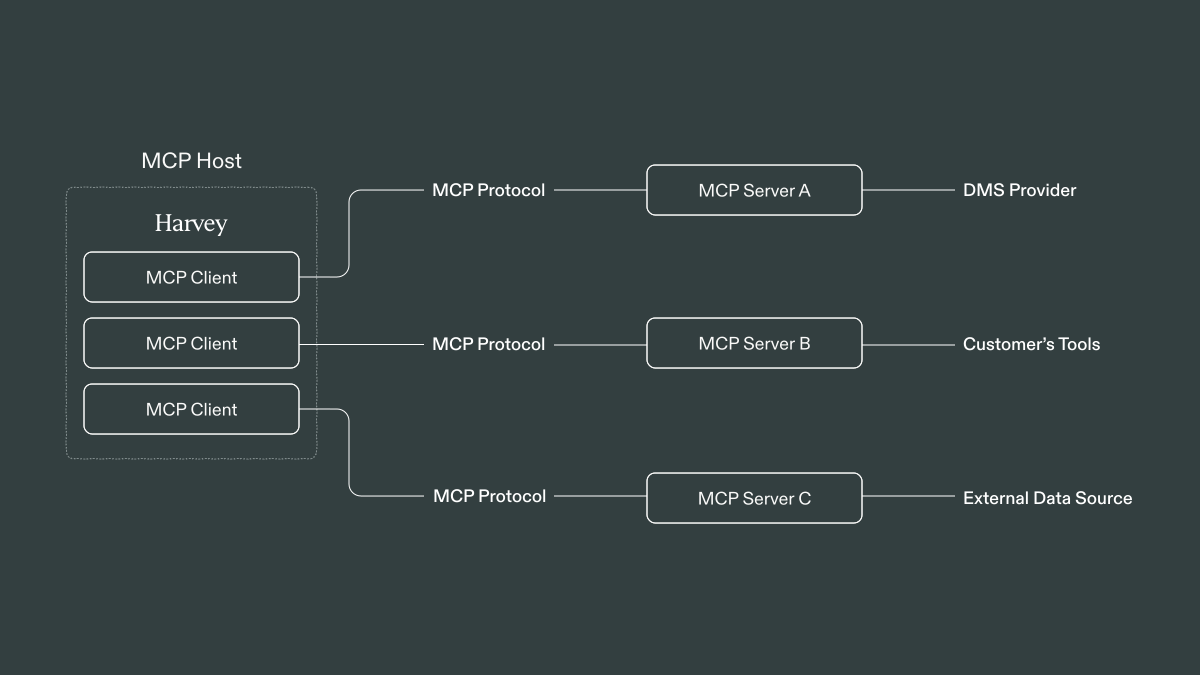
So, instead of building one-off integrations that require bespoke implementations, our MCP client uses a standardized protocol for external systems to interact with Harvey. That distinction matters. It helps reduce our team’s engineering lift required to scale new integrations, like implementing specific APIs, building custom authentication, and keeping up with maintenance as specs change. With MCP, third-party integrations expose a consistent interface that Harvey can work with immediately, reducing the time it takes to onboard new integrations and empowering external partners to develop a rich feature set alongside Harvey.
MCP allows an agent to leverage updated capabilities of connected partners at runtime. When Harvey connects to an MCP server, it can ask for the full list of available tools and resources, and Harvey receives a structured description in return. If a partner adds new capabilities, Harvey can immediately leverage them the next time it connects.
The same principle allows for more user customization within Harvey. Imagine a practice group that built a specialized due diligence tool or a Knowledge team that has their own agent. Those internal capabilities can be exposed to Harvey’s client through MCP in a controlled and standardized way. The firm or in-house team decides what to publish as a server, and Harvey will automatically understand what’s available as a client. This creates a scalable model through which customers can surface high-value internal assets and expertise within Harvey.
Harvey as an MCP Server
Harvey could also function as an MCP server, which opens up a different set of possibilities. As a server, Harvey's capabilities become accessible to other systems. Customers can then embed Harvey directly into their existing tools and workflows.
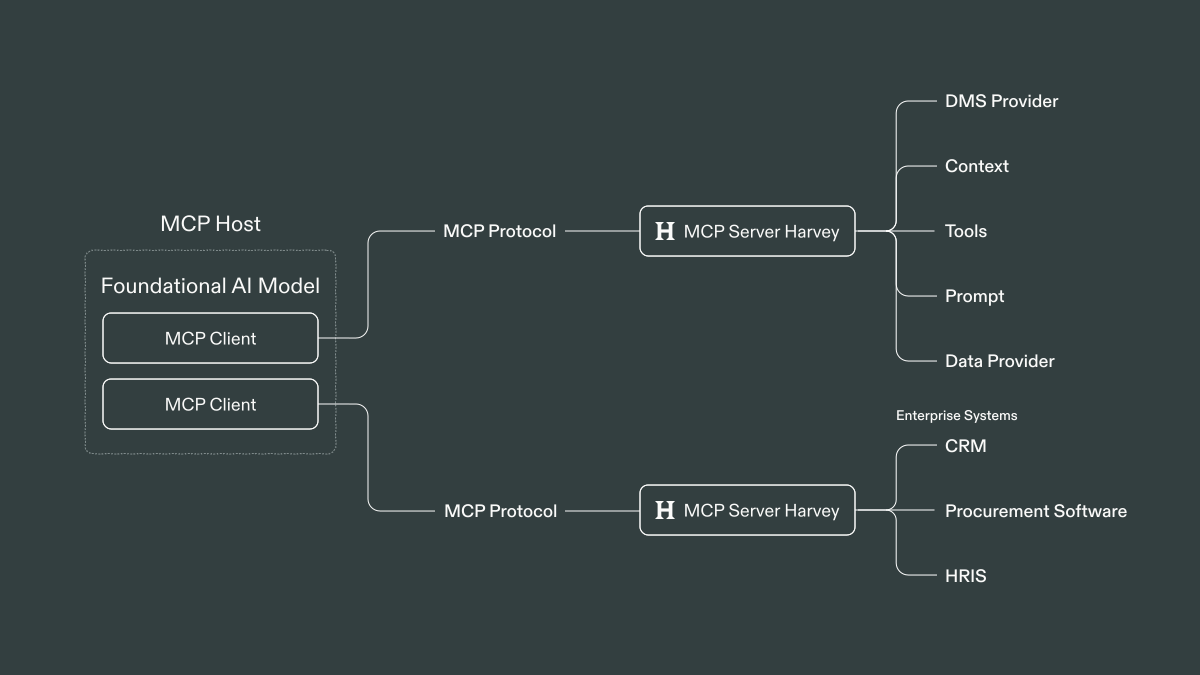
Consider again the variety of systems that legal teams already interact with, including research providers, client intake systems, applications for firm-wide resources, custom chatbots, and practice group-specific knowledge hubs. Each of these represents a potential integration point where Harvey's legal reasoning capabilities can add immediate value. With Harvey as an MCP server, these tools can call Harvey directly for document analysis, vault reviews, research queries, or workflows. Some examples include surfacing Harvey’s legal insights into firm-specific chatbots or embedding Harvey workflows into internal tools to provide more guidance across the business. Teams can also explore building client-facing solutions that extend Harvey’s knowledge into new tools, helping open new revenue streams and strengthen client relationships.
“Centralized permissions, auditing, and ethical walls could be applied uniformly across all connected systems, regardless of where the query originates.”
The MCP approach helps ensure that customers can explore customized solutions while still maintaining the right safeguards already built into Harvey. Centralized permissions, auditing, and ethical walls could be applied uniformly across all connected systems, regardless of where the query originates. This means teams can explore new embedded solutions without sacrificing the governance controls that legal work requires.
A Centralized Hub for Legal Work
We're building toward a future where Harvey remains the central hub for legal work while addressing a growing need for customization and specialized tools. Through a Harvey client, we will enable partners to publish MCP servers that are discoverable and callable by Harvey, making it easier than ever to extend the platform's capabilities. And we’ll build a Harvey server to allow customers to apply Harvey and its legal intelligence layer along with their own unique tools.
Our goal is not to replace external systems or custom tools. Instead, we want to build the foundational platform that supports lawyers end-to-end across their work while maintaining the necessary controls. Harvey will continue to lead the way, and we are excited to help teams customize their experience with MCP-enabled capabilities.
If you’re a current Harvey customer and interested in learning more about our MCP approach, please reach out to your account team.


